

Filter By Category
Archives
Share on -


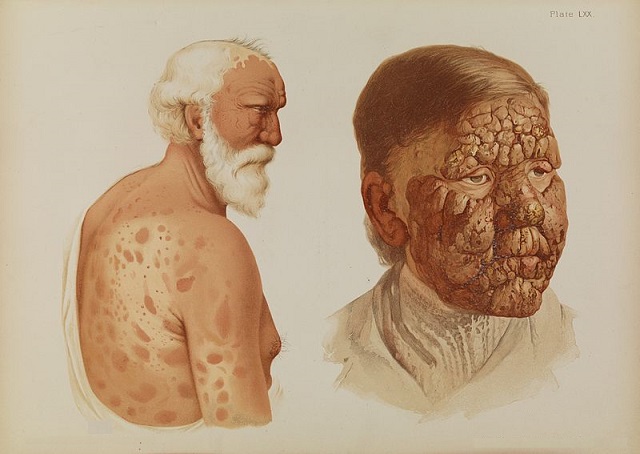
LEPROSY
ABSTRACT -
Leprosy also known as Hansen’s disease, a bacterial infection which damages the skin and peripheral nervous system. It can be transmitted from a person to another person through sneezing, coughing droplets from mouth and nose. Other than humans, animals like chimpanzees, mangabey monkeys, and nine-banded armadillos also have these bacteria in them that can be easily transmitted to humans which can result in giving rise to the disease. It is completely curable and can be treated with the help of various antibiotics and multi drug therapies.
CAUSES -
- Infectious bacteria like Mycobacterium leprae and M. lipomatosis
- Bodily contact with leprosy patient/li>
- Animal contact which have leprosy bacteria in them
SIGNS AND SYMPTOMS –
- Skin damage and disfiguration
- Eye-sight issues
- Reduced weight
- Joint pain
- Weak muscles
- Numbness and loss of sensation / touch
- Nerve damage
- Hair fall
COMPLICATIONS –
- Facial deformity
- Loss of sensation power
- Permanent damage in Nervous System
- Decreased healing capacity results in infection
- Extreme weakness in muscles
DIAGNOSIS –
- Clinical Tests
- Nerve Biopsy/li>
- Physical Examination
- Creatinine Test
- CBC (Complete Blood Count) Test
- Liver Functioning Test
TREATMENT –
- Multi drug therapy for destroying the bacteria
- Antibiotics and steroid medication for reducing pain and swelling
- Surgery
RISK FACTORS –
- Living in Leprosy prevalent area
- In contact with patients affected
- Genetics
- Weak immune system
- In contact with infected animals
PREVENTION –
- Avoid the infected area or people
- Vaccination like BCG Vaccine helps to kill leprosy bacteria
EPIDEMIOLOGY –
- As per the report, prevalence of leprosy is 0.25 per 10,000 population.
- Report showed that 60% of the cases were Multibacillary (a type of leprosy) out of which 39% was the female population.
Share on -


 . Developed by