

Filter By Category
Archives
Share on -


DELTIBANT
Generic Name: DELTIBANT
ABSTRACT -
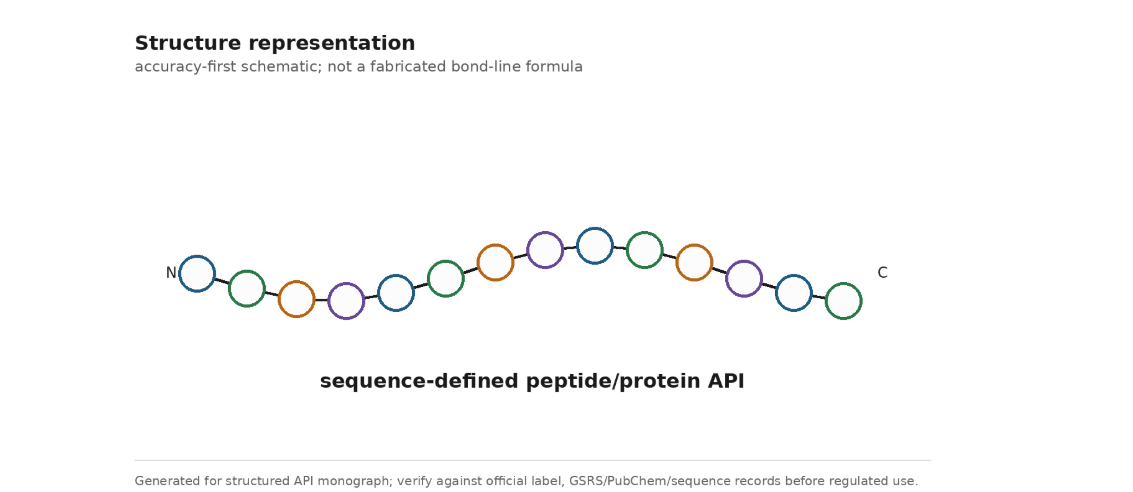
Deltibant is a peptide-like bradykinin receptor antagonist; a conventional compact small-molecule formula image would be misleading. A single small-molecule molecular formula is not applicable or would be misleading for this modality. The representation above is a clean modality-specific schematic rather than a bond-line chemical structure.
This document is for structured API information only. It is not a prescribing guide. Clinical use, if any, must follow the approved local label, clinical-trial protocol, and specialist medical supervision.
DOSAGE -
- No routine clinical dosage is established for this structured monograph.
- Dose, route, frequency, and monitoring must follow the verified label, study protocol, or specialist order.
- For investigational or complex APIs, administration should occur only in authorized research or specialty-care settings.
- Do not use this document as a prescribing guide.
SIDE EEFECTS -
Possible side effects and safety concerns include:
- Injection/infusion-site reactions, fever, chills, fatigue, headache, nausea, or rash may occur.
- Hypersensitivity, immune responses, laboratory abnormalities, or target-class toxicities are possible.
- Peptide, protein, oligonucleotide, polymer, or anticoagulant/platinum components may require protocol-specific monitoring.
- Rare or delayed risks may not be fully characterized for investigational APIs.
ALLERGIC REACTIONS -
Hypersensitivity to deltibant or related compounds/products may occur. Symptoms may include:
- Immediate urticaria, itching, flushing, or generalized rash
- Facial, lip, tongue, or throat swelling
- Wheezing, chest tightness, or breathing difficulty
- Dizziness, fainting, severe hypotension, or collapse
- Anaphylaxis, although uncommon, requires emergency medical treatment
Important: Patients who develop an allergic reaction to deltibant should seek immediate medical attention and inform all future healthcare providers of the allergy.
DRUG INTERACTIONS-
Deltibant may interact with certain medicines, biologics, vaccines, clinical protocols, or medical conditions. Caution is needed with:
- Drug-interaction data should be verified against the intended official substance record and clinical protocol.
- Avoid combining with medicines that have overlapping toxicity until a specialist reviews the regimen.
- Vaccines, biologics, anticoagulants, CNS drugs, and supplements may be relevant depending on final identity.
- Report all prescription and non-prescription products before use.
Patients should inform healthcare providers about all prescription medicines, over-the-counter medicines, herbal products, vaccines, and supplements they are using.
PREAUTONS–
- Verify API identity, spelling, salt/form, strength, route, indication, and local regulatory status before use.
- Review renal, hepatic, hematologic, cardiovascular, immune, pregnancy, and lactation considerations as applicable.
- Monitor clinical status and laboratory parameters according to the approved label or clinical protocol.
- Use only within qualified medical, pharmacy, manufacturing, or research systems with appropriate documentation.
WARNINGS –
- Serious allergic reactions, severe organ toxicity, CNS effects, cardiovascular events, or drug-specific adverse reactions are possible.
- Seek urgent care for breathing difficulty, facial swelling, severe rash, fainting, chest pain, severe abdominal pain, jaundice, seizures, or collapse.
- This document is not a substitute for the current approved label, protocol, or specialist medical judgment.
- Keep out of reach of children.
Structure quality note: non-small-molecule or unresolved; schematic/notice generated instead of fabricated bond-line structure. Source category: PubChem/DrugBank peptide-like record; schematic selected for readability.
Share on -


 . Developed by