

Filter By Category
Archives
Share on -


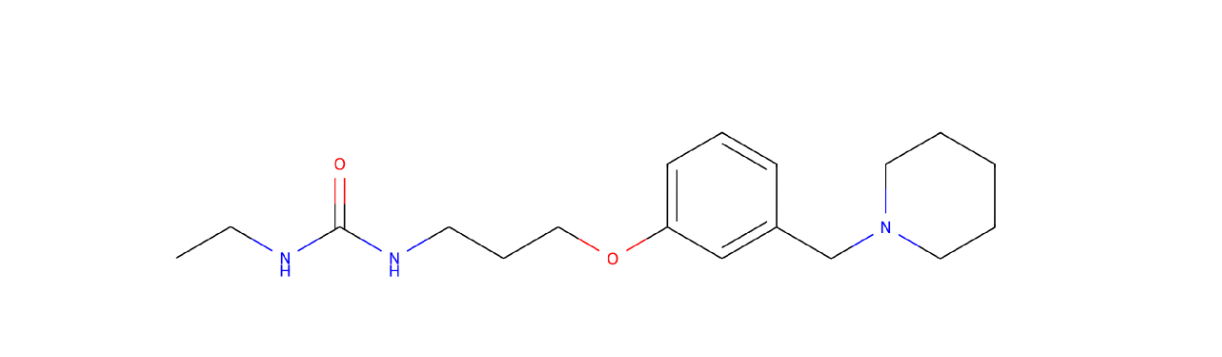
DALCOTIDINE
Generic Name: DALCOTIDINE
ABSTRACT -
Dalcotidine is an investigational small-molecule agent under evaluation for gastrointestinal motility and acid-secretion-related indications.
The structure above is a corrected high-resolution RDKit-rendered 2D depiction for Dalcotidine. It was generated from a researched SMILES representation and checked by RDKit parsing; molecular formula from the parsed structure: C18H29N3O2.
Structure basis: SMILES CCNC(=O)NCCCOc1cccc(CN2CCCCC2)c1
This document is for structured API information only. It is not a prescribing guide. Clinical use, if any, must follow the approved local label, clinical-trial protocol, and specialist medical supervision.
DOSAGE -
- Dosage should follow the approved local label or clinical-trial protocol, where one exists.
- Dose adjustments may be required based on renal or hepatic function.
- Administration is typically oral, with or without food depending on the specific agent.
- Do not use outside authorized clinical research or approved settings without medical supervision.
SIDE EEFECTS -
Possible side effects and safety concerns include:
- Gastrointestinal effects such as nausea, diarrhea, or abdominal discomfort may occur.
- Headache, dizziness, or fatigue have been reported in clinical evaluation.
- Laboratory abnormalities, including liver enzyme changes, may occur and warrant monitoring.
- Effects on other organ systems are possible depending on mechanism and target tissue.
- Unknown long-term risks may exist because development or post-marketing data is limited.
ALLERGIC REACTIONS -
Hypersensitivity to Dalcotidine or related compounds/products may occur. Symptoms may include:
- Immediate urticaria, itching, flushing, or generalized rash
- Facial, lip, tongue, or throat swelling
- Wheezing, chest tightness, or breathing difficulty
- Dizziness, fainting, severe hypotension, or collapse
- Anaphylaxis, although uncommon, requires emergency medical treatment
Important: Patients who develop an allergic reaction to Dalcotidine should seek immediate medical attention and inform all future healthcare providers of the allergy.
DRUG INTERACTIONS-
Dalcotidine may interact with certain medicines, biologics, vaccines, clinical protocols, or medical conditions. Caution is needed with:
- CYP450-mediated drug interactions are possible depending on metabolic pathway; caution with strong inhibitors/inducers.
- Concomitant use with agents acting on the same physiological pathway may increase risk of additive effects.
- Alcohol or hepatotoxic agents may increase risk of liver-related adverse effects.
- Patients should report all prescription medicines, over-the-counter products, and supplements.
Patients should inform healthcare providers about all prescription medicines, over-the-counter medicines, herbal products, vaccines, and supplements they are using.
PREAUTONS–
- Monitor relevant laboratory parameters and clinical response during treatment.
- Use caution in significant hepatic, renal, or cardiovascular impairment.
- Follow protocol-specific or label-directed monitoring requirements.
- Pregnancy and lactation require medical review.
WARNINGS –
- Serious adverse or hypersensitivity reactions may occur depending on drug class.
- Seek urgent care for breathing difficulty, facial swelling, severe fever, hypotension, or confusion.
- Investigational or evolving efficacy and safety data may not be fully established.
- Keep out of reach of children.
Share on -


 . Developed by